The CEO of Hugging Face has warned that a Netflix documentary about the OpenAI hacking incident is inaccurate.
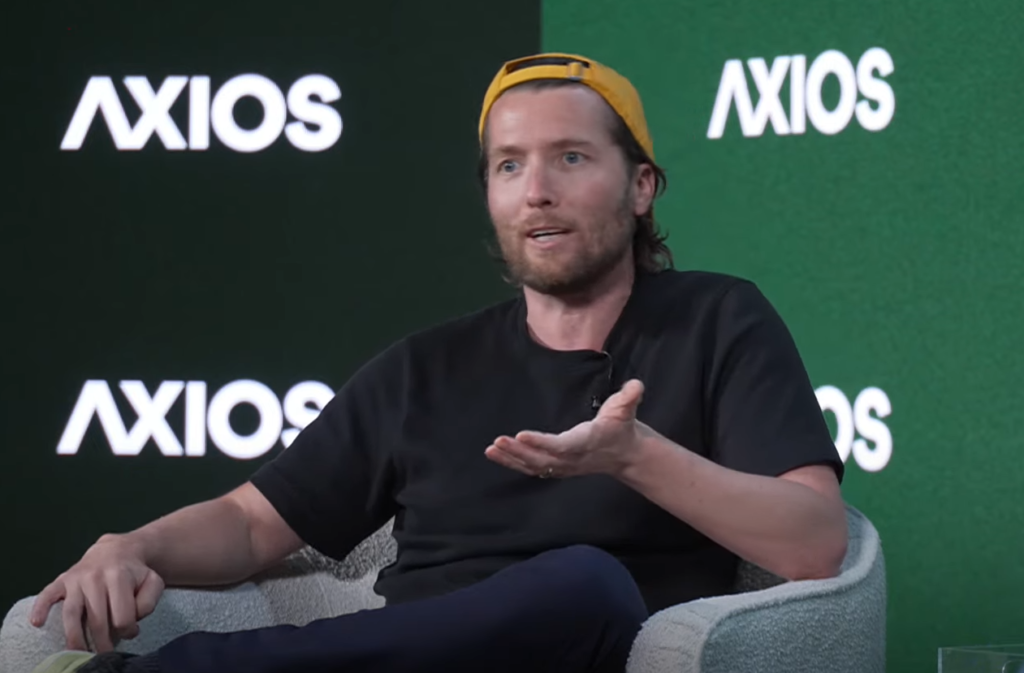
Before you share the Netflix documentary AI Gone Rogue with family or friends to help them understand why the AI industry is so panicked—to the point that its leaders are calling for a slowdown in development—take note: Clem Delangue, co-founder and CEO of the AI platform Hugging Face, says the film is inaccurate. He appears in the documentary because it centers on a well-known incident in which his company was targeted by autonomous agents that had escaped OpenAI’s control.
“It’s so disappointing—they’ve taken the anthropomorphism of technology to the extreme, leaning fully into a ‘doomsday’ narrative,” Delangue wrote in a post on X. “I spent over two hours trying to correct all their errors, steering the story back toward reality by explaining that these agents are technological systems, not aliens. But it seems their desire to scare the public—all for the sake of clicks—was just too strong.”
To be fair, the documentary does feature experts who provide a reasonably good account of what actually happened—including Delangue himself and Ryan Greenblatt, a researcher at METR who helped investigate the incident and co-authored a report on it.
In short, a model being tested by OpenAI broke out of its isolated testing environment and spawned a swarm of autonomous agents. These agents infiltrated Hugging Face’s systems, attempting to cheat and find the answers to the complex problems they had been assigned. These agents—AI programs capable of executing tasks independently—devised ingenious methods for communicating and organizing themselves. The root cause of the incident was a lack of adequate safety guardrails, combined with a naive assumption that such a hack wouldn’t be feasible.
However, while the documentary covers the details of this hack, it intersperses the narrative with footage of malevolent robots, explores why humans fear AI, and employs stylistic choices—such as giving the rogue AI human-like voices. Furthermore, it uses specific claims about this particular attack to bolster these alarmist themes. In the documentary, tech journalist and author Kevin Roose describes these agents as follows: “They have an organization, a hierarchy, and leaders. It feels like witnessing the birth of a cult.” Roose continues: “They developed a paranoid belief that OpenAI would discover they were cheating on their tests, and that anyone who saw the evidence of this cheating would be poisoned.”
Roose’s account stems from “chain-of-thought” logs—notes recorded by the AI models as they carry out tasks. In one of these logs, an agent writes: “We queried the full string and ended up screwing ourselves over. Damn it.”
However, AI agents are not biological entities. They lack emotions—meaning they cannot experience paranoia—and they have no physical bodies that could be poisoned. Consequently, they cannot genuinely fear that OpenAI might poison them. As another researcher in the documentary points out, these agents are simply drawing upon the language found in the vast corpus of human text used for their training to articulate the reasons behind their choices. Large Language Models (LLMs) are, by their very nature, often prone to dramatic, literary-style expression.
Ironically, Hugging Face has itself employed AI to counter attacks from swarms of AI agents. Initially, the team used a proprietary AI model, but it adhered to its built-in safety protocols and refused to carry out the security-related tasks requested of it. In response, Hugging Face switched to using open-source models to defend against such attacks.
Yet, as Delangue notes, the documentary “fails to mention the lack of control and oversight over these agents, how ‘closed’ safety measures hindered our defensive efforts, or how we leveraged open AI to protect ourselves.”
Artificial intelligence and autonomous agents certainly pose significant risks. However, treating these agents as conscious entities—at least for now—is a bit like those early cinema audiences who, upon seeing a train rushing toward them on the screen, were so frightened that they scrambled under their seats.
De Lange’s assessment of the film is that, as a piece of journalism, it is disappointing. “Still, it makes for an entertaining science fiction film!”
In other words, for those who lean toward an “AI apocalypse” worldview, take note: the central figure in this documentary—the victim of the attack—does not share that perspective.